Thursday, July 30, 2009

Texas Librarians Tattoo Calender


AUSTIN, Texas — So much for the stereotype. Texas librarians are baring their skin and revealing their tattoos — all to raise disaster relief money to help damaged libraries. Photos of the librarians and their body art appear in a new calendar sold by the Texas Library Association.
Librarian Shawne Miksa says it's a way to get people to notice library issues. As the model for November 2010, she shows off Chinese characters on her lower back that mean "wisdom" and "desire."
The "Tattooed Ladies of TLA" 18-month calendar is a follow-up to the successful "Men of Texas Libraries" calendar, which raised $9,000 to help libraries damaged by hurricanes Katrina and Rita. The TLA says libraries thrive on promoting diversity and free expression and the calendar exhibits that spirit.

Tuesday, July 28, 2009

Tuesday, July 21, 2009

Police Drop Charges in Gates Case

CAMBRIDGE, Mass. -- Authorities agreed to drop a disorderly-conduct charge against renowned Harvard University African-American studies scholar Henry Louis Gates Jr., who had been arrested at his own home last week after police answered a call about a suspected break-in there.

The arrest had sparked concern that Mr. Gates was a victim of racial profiling, a controversial practice in which police allegedly use race as a factor in identifying criminal suspects.

In a joint statement, Mr. Gates' lawyer, the City of Cambridge, Mass., its police department and the county district attorney's office called the July 16 incident "regrettable and unfortunate." The statement added that "this incident should not be viewed as one that demeans the character and reputation of Professor Gates or the character of the Cambridge Police Department" and that "all parties agree this is a just resolution to an unfortunate set of circumstances."


Bloomberg News
Harvard professor Henry Louis Gates Jr., shown in 2007, told police he was the victim of racism.
In an interview Tuesday, Mr. Gates said the situation "shows our vulnerability to the caprices of individual police officers who for whatever reason are free to arrest you on outrageous charges like disorderly conduct." Mr. Gates called a police report alleging he yelled at an officer and was uncooperative "a work of sheer fantasy."

Mr. Gates, a Harvard professor and director of the W.E.B. Du Bois Institute for African and African American Research, said he hadn't decided whether to pursue any legal action. He said if the officer who arrested him, Sgt. James Crowley, "sincerely apologized, I would be willing to forgive him."

Sgt. Crowley didn't return phone calls.

Mr. Gates said he had returned from a trip to China last Thursday afternoon in a hired car. He said he and the driver had trouble opening his front door, which was jammed. Mr. Gates says he used a key to enter through the back door; his driver pushed open the front door. A passerby called police because she thought the men were breaking into the house. Mr. Gates said he had no issue with the woman's call.

Randomly Noted: The Gates Arrest
Mr. Gates said Sgt. Crowley arrived and asked him to step outside. Mr. Gates said he declined because of the officer's tone. He said Sgt. Crowley also asked him to prove he was a Harvard professor and followed him into his kitchen, uninvited. "He was clearly convinced I was the perpetrator," Mr. Gates said.

Mr. Gates alleges that Sgt. Crowley declined to state his name and badge number. "Are you not answering me because I'm a black man in America?" he says he told the officer. In his report, Sgt. Crowley said he had given Mr. Gates his name.

Robert McCrie, professor of security management at John Jay College of Criminal Justice in New York, called Mr. Gates' arrest "gratuitous" because, he said, even if Mr. Gates had yelled, such conduct doesn't amount to disorderly conduct. He said police departments need to improve training, especially when interviewing citizens at home. "We in America believe very much in the privacy of our own home," he says.

Drew Gilpin Faust, Harvard's president, issued a statement saying she was "gratified" the charges against Mr. Gates were dropped, but added, "I continue to be deeply troubled by the incident."

Write to John Hechinger at john.hechinger@wsj.com and Simmi Aujla at simmi.aujla@wsj.com

In Final Round of Grants, Gates Foundation Gives $6.5M To Upgrade Library Computers

Third round of Opportunity Online grants serves 11 states; ; advocacy training required
Norman Oder -- Library Journal, 7/20/2009


Third round of hardware grants
Part of $350M in domestic library support
$3.7M local match expected
The Bill & Melinda Gates Foundation has announced its third and final round of Opportunity Online hardware grants, $6.5 million in grants to public libraries in 11 states. While the foundation, which has invested $350 million in domestic library support, did not initially aim to pay for hardware, it has recognized the need to upgrade and add public computer workstations in low-income areas, especially given the increasing demand for Internet access at libraries.

Last year’s round was worth $8.1 million, while the 2007 grants totaled $8.3 million. The remaining 18 U.S. states participated in the foundation’s Public Access Computing Hardware Upgrade Grant program in 2006.

In the current round, nearly 800 library branches in Hawaii, Illinois, Indiana, Minnesota, Missouri, Nebraska, North Dakota, Ohio, South Dakota, Vermont, and Wisconsin are eligible. The libraries are expected to leverage $3.7 million in local funding.

Read On

http://www.thirdwayblog.com/wp-content/uploads/2007/01/bill-melissa-gates-foundation-785125.jpeg

Monday, July 20, 2009

Friday, July 17, 2009

Wednesday, July 15, 2009

Tuesday, July 14, 2009

Inquiry bodes ill for writers

Inquiry bodes ill for writers

"Copyright recognises and enshrines the value of original work." ... Tim Winton.
Jacob Saulwick National Correspondent
July 13, 2009
THE Federal Government's economic advisory body is likely to recommend scrapping copyright provisions preventing the parallel importing of books.

The Herald understands one of the proposals the Productivity Commission will present tomorrow will be to free up restrictions on book imports, after a period of up to three years to give the industry time to adjust.

If adopted, the changes would significantly change the way books were sold and, according to writers and publishers, undermine the ability of new Australian authors to land their break.

Copyright provisions are intended to protect Australian authors and publishers.

Under laws introduced in 1991 Australian publishers are given 30 days to publish a local version of any book published in the world. Bookshops must then sell the Australian version and cannot import a cheaper alternative.

In establishing the inquiry in November, the former minister for consumer affairs Chris Bowen set off a pitched battle between booksellers on one side and authors and publishers on the other.

The booksellers - through the Coalition for Cheaper Books set up by Dymocks and the retail chains Woolworths and Coles - have argued that removing copyright limits would benefit customers.

Retailers have also argued they are losing business as they struggle to compete with cheap books sold on Amazon.com.

The Productivity Commission, known for espousing orthodox economic principles, is uncomfortable with market restrictions on book imports.

But in a draft paper in March the commission said removing all import restrictions would damage the industry. Instead it advocated limits should apply for a year after a book was first published, but then be removed.

The Herald understands the final report tomorrow is likely to go further and suggest the eventual removal of all import restrictions.

Those fighting the removal are probably the country's most articulate lobby. Authors such as Tim Winton, Kate Grenville and Peter Carey have peppered the commission with submissions. Winton wrote: "Copyright recognises and enshrines the value of original work.

"Copyright is the single most important industrial fact in a writer's life, the civilising influence of a culture upon a market."

Maree McCaskill, the chief executive officer of the Australian Publishers Association, said New Zealand was the only other big market to do away with restrictions on book publishing.

And even in New Zealand, there was little evidence that it had led to lower prices.

Ms McCaskill said an open book market would be "seriously devastating" to the industry, resulting in lost jobs and fewer publishing houses.

She said publishers would be less likely to search for and nurture new authors, and instead would rely more on established names in the book industry to guarantee sales.

The executive director of the Australian Society of Authors, Jeremy Fisher, said the copyright arrangements worked well, protecting the industry at no cost to the taxpayer.

The commission's draft paper noted there was little evidence that books were more expensive in Australia than overseas.

However, it said removing restrictions was likely eventually to lead to lower prices.

The Choices That Closed a Window Into Afghanistan

By MICHIKO KAKUTANI
Published: July 13, 2009
Among the many lasting consequences of the Bush administration’s decision to invade Iraq in 2003 was the collateral damage it inflicted on Afghanistan and the war there against Al Qaeda and the Taliban. Money, troops and expertise were diverted to Iraq, and as the RAND Corporation political scientist Seth G. Jones observes in his useful new book, the initial success of the military operation in Afghanistan was squandered.


Read On

Monday, July 13, 2009

Sorry for the delay in blogging

Will be back at it tomorrow!

Wednesday, July 8, 2009

The worst books at your library

The worst books at your library ( from the Baltimore Sun)

While I'm hesitant to kick libraries when they're down, I couldn't pass up the chance to share the Awful Libary Books blog.

Created by two Michigan librarians, Mary Kelly and Holly Hibner, the site chronicles the absolute worst books discovered on library shelves. We're talking The New York Times' 1985 guide to the return of Haley's Comet, a Star Power manual, outlining how to use obsolete computer programs I've never even heard of, and a 1962 book about what man will do when we reach the moon someday.

As Kelly and Hibner point out, these books aren't bad per se, they're just horribly outdated and could now actually be harmful for anyone trying to find information they can actually use.

Anyone here want to use a medical tome about AIDS that's about 20 years out of date? I didn't think so.

The best part is, they're always looking for more material. So the next time you find a book that makes you giggle, roll your eyes or even head for the trash can, snap a picture and send it to Awful Library Books where we can all "enjoy" it.

Thursday, July 2, 2009

Wednesday, July 1, 2009

Cleveland Library has to cook its books


Staff reports

About $400,000 worth of Cleveland Library’s books are headed to a shipping container to cook in nearly 100-degree heat until $8,000 in donations can be found to pay for insulation, a combination air conditioner and heater, lights, wiring and finishing materials at the library.

No one at the library can tell how long the book bindings will survive in the hot, dry container temperatures.

The 40-foot container is getting shelving built by the N.C. Baptist Men for use as an on-site bookmobile, which also can be used as an off-site self-contained library. While not as flexible as the customary traveling bookmobile many libraries use, it will hold four times more books and can be moved by crane and truck to a shopping center, church or school parking lot. It will save Cleveland about $320,000.

The independent Cleveland Library on Hwy 42 is several years ahead of schedule on its book acquisition, which is forcing creative solutions to shelving and display. It has received 30,000 books and videos in more than 10 months and is receiving 1,000 or more books per week. The library increased Cleveland’s access to books from the county’s 1.7 books per resident to 3.7 and is on target to reach six by next year, when additional space will be needed.

read on....

Tuesday, June 30, 2009

Lots to love about the Chicago Public Library including fishing poles

Bucktown-Wicker Park Branch Library [320x200].jpg
The Chicago Public Library is a great resource for families. You probably already know that, right? But I am not just talking about checking out books for the kids. Did you know that you cancheck out fishing poles from some branches and meet famous authors face to face? Yep, it true. This place has a lot more to offer than books. Check out some of these cool programs.

Monday, June 29, 2009

The bible of baseball cards

The bible of baseball cards
For many boys who were collectors, a 1973 book helped turn one's hobby into a full-fledged obsession.

Sunday, June 28, 2009

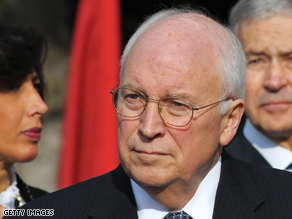
Cheney inks book deal reportedly worth millions

From
 Cheney is writing a book.
Cheney is writing a book.

(CNN) – Having made his rounds on the cable news circuit over the last few months, former vice president Dick Cheney is now headed to a book store near you.

Cheney has struck a deal with publishing house Simon & Schuster to write his memoirs covering a more than 40-year career in government, stretching all the way back to his roles in the Nixon and Ford administrations.

“It has been a tremendous privilege to serve during some of the most interesting and challenging times, as well as with some of the most fascinating people, in American history,” Cheney said in a statement provided to CNN. “I look forward to writing about these experiences for the first time.”


Read On.... If you can stomach it!

Saturday, June 27, 2009

New editions of 4 King books in the works June 23, 2009

Four books by the Rev. Martin Luther King Jr. that have been long out of print will be published again under a deal with Beacon Press brokered by King's youngest son.

Beacon, a department of the Unitarian Universalist Assn., publishes books on social justice, human rights and racial equality. Among the authors it has published are James Baldwin, Derrick Bell, Cornel West, Howard Thurman, Marian Wright Edelman and Roger Wilkins.

Reverend Martin Luther King Jr

Wednesday, June 24, 2009

Libraries tap into Twitter

Libraries tap into Twitter

Increasing numbers of librarians are using Twitter to engage readers and spread informationTwitter bird logo

read on

Tuesday, June 23, 2009

A Literary Legend Fights for a Local Library


VENTURA, Calif. — When you are pushing 90, have written scores of famous novels, short stories and screenplays, and have fulfilled the goal of taking a simulated ride to Mars, what’s left?

Monday, June 22, 2009

Richard Nixon's Presidential Library releases more tapes

Presidential history buffs alert: The Richard Nixon Presidential Library and Museum has announced Nixonmanualplans to release an additional 154 hours of tapes that the nation's 37th president secretly made of his own meetings and conversations. This marks the fifth release of Nixon tapes, according to Ken Hughes of the presidential recordings program atUniversity of Virginia's Miller Center of Public Affairs. Hughes says the recordings should be available online almost immediately, but he'll also be transcribing some of the juicier bits on his wonderfully named blog, Fatal Politics.

The tapes being released tomorrow were made during the first two months of 1973. Our friends at the Miller Center provide some historical context:

During this time, Nixon forced South Vietnamese President Nguyen Van Thieu to accept a settlement with North Vietnam that both men recognized would lead to a Communist military victory. Nixon needed the settlement to conceal the failure of his "Vietnamization and negotiation" strategy to achieve the goal of a South Vietnam that could defend and go Read On vern itself.

Wednesday, June 17, 2009

Simon & Schuster to Sell Digital Books on Scribd.com

n another sign that book publishers are looking to embrace alternatives to Amazon.com’s Kindle e-book store, Simon & Schuster has agreed to sell digital copies of its books on Scribd.com, a popular document-sharing Web site.

William P. O'Donnell/The New York Times

Books from best-selling authors like Stephen King would be among the titles available for purchase on Scribd.com.

Simon & Schuster, a division of CBS, plans to announce Friday that it will make digital editions of about 5,000 titles available for purchase on the site, including books from best-selling authors like Stephen KingDan Brownand Mary Higgins Clark. It will also add thousands of other titles to Scribd’s search engine, allowing readers to sample 10 percent of the content of the books on the site and providing links to buy the print editions.

“We are interested in getting our books in front of consumers in as many formats and distribution platforms as possible,” said Ellie Hirschhorn, chief digital officer of

Read On 

Tuesday, June 16, 2009

Monday, June 15, 2009

Obama's half-brother George signs book deal

GEORGE OBAMA.jpg

George Obama, 27, is the youngest of the seven children born to Obama's father in Kenya and was recently arrested there for marijuana possession. The two Obamas have different mothers and never met until Obama visited Kenya in 1987.

The book is tentatively titled Homeland and is scheduled for publication in January 2010. It will be co-written by Damien Lewis, author of the books Apache Dawn, Cobra Gold, Operation Certain Death, Bloody Heroes, Slave and Desert Claw.

"Even had George Obama not been our president's half brother, his story is moving and inspirational," said SimonSchuster publisher David Rosenthal. "It is an object lesson in survival, selflessness and courage."

The publishing deal makes George the fourth member of the Obama clan to sign a book deal in recent months. Shortly before his inauguration, Obama signed a deal for a teenage version of his best-selling book Dreams From My Father.

Basketball coach Craig Robinson, the president's brother-in-law and First Lady Michelle Obama's brother, is writing a book called A Game of Character. Obama's half sister Maya Soetoro-Ng is writing a children's book called Ladder to the Moon.

-IANS

http://www.themoneytimes.com/20090615/obamas-half-brother-george-signs-book-deal-id-1072340.html

Saturday, June 13, 2009

Old graves in path of Peoria library's expansion

Graves found

Lincoln Branch Library can't expand until bodies are removed 

If the first few days of digging are any indication, more bodies lay buried around the Lincoln Branch Library in Peoria than officials had thought as they plan a major expansion -- way more.

The hope was there wouldn't be many, but after scraping away about a foot of topsoil this week, archeologists soon found evidence of more than 50 graves, raising immediate concerns others could be nearby.

"We have no idea how many [skeletons] there are," said M. Catherine Bird, research coordinator of the Marengo-based archeological firm hired to excavate the property. "We don't have information that says how many lots were sold or how many people were buried in the lots."

Built on land once used in the mid-19th Century as a final resting place for hundreds of pioneers, the library can't proceed with the planned $5.5 million expansion until officials are sure all the bodies have been removed.
y law, human remains are to be protected when they are uncovered at a construction site. To avoid potential delays with its expansion, the Peoria library got a permit to excavate the property bordering the library and remove any remains found there, said Dawn Cobb of the Illinois Historic Preservation Agency.

Peeling away the topsoil and performing the initial survey, which will cost $53,000, likely will take a couple of weeks, said Bird, who works for Midwest Archaeological Research Services. Officials said that if the firm found evidence of burial remains, the project likely could take several months and cost more money. The bodies would be relocated to another cemetery.

Depending on how many grave sites are discovered, the excavation at most could cost the library $400,000, supervisor of public relations Trisha Noack said.

"We're committed to building on that spot," Noack said.

Work on the library started in 1910 on the site of what had been called the City Cemetery. Opened in 1842, the cemetery was closed in 1886, during a time when there was fear the bodies would contaminate the public drinking water, officials said.

The remains of at least 388 early settlers were moved to Springdale Cemetery. People who watched the evacuation said they doubted many remains were missed, according to reports.

At least two families, however, still are buried in their original plots near the library.

The families were upset when they saw the other tombs being moved and in 1887 got court injunctions that the graves of their loved ones never be disturbed, Noack said.

Toward the front of Lincoln Park, where the library is located, the graves of Frederick Griffin, his wife, mother and a granddaughter aren't anywhere near the construction site, she said.

But the burial sites of Harriman Couch's wife and child happen to lie right in the path of the originally planned wedge-shaped annex.

The library's lawyers looked into what it would take to get permission to move the graves.

"That injunction stays enforced forever, and it would be very expensive and time-consuming to overturn it," Noack said.

So the library changed the shape of the expansion to avoid the graves. A protective barrier will be placed around them to make sure nothing is disturbed.

The library needs to expand but doesn't want to abandon its original home built by philanthropist and steel baron 
Andrew Carnegie, Noack said.

"It really is an architecturally important building," she said. "A used building is a preserved building. When you decide not to use a building, that's when it gets into trouble."


from:http://www.chicagotribune.com/news/local/chi-peoria-library-bodies-12-jun12,0,2856219.story

Friday, June 12, 2009

Baseball's League of Nations: Exhibit shows Native American impact on baseball

By CHASE WRIGHT

Times Staff Writer


STAMFORD -- Jackie Robinson didn't set the precedent for the minority integration of baseball -- Louis Sockalexis did. 

A Native American from the Penobscot tribe, Sockalexis played three seasons for the Cleveland Spiders beginning in 1897. His major league contract didn't break the color barrier or have the same cultural impact that Robinson did, but Sockalexis, and other early American Indian ball players, were the first non-whites assimilated into the sport of baseball. 

"I think Native Americans had an important impact on baseball as the first group of integrators," said Jeffrey Powers-Beck, author of "The American Indian Integration of Baseball." 

A professor of English and associate dean of graduate studies at East Tennessee State University, Powers-Beck is also an avid baseball fan, which inspired the idea for the book. 

His book, in turn, has inspired the curators of the Stamford Museum and Nature Center, who developed two exhibits and a series of programs around the highly acclaimed publication. 

"Baseball's League of Nations: A Salute to Native American Baseball Players" and "Dynamic Traditions: Form and Function in Native American Art" open to the public on Saturday, June 20 and will be on exhibit through Oct. 18 in the Bendel Mansion Museum Galleries. 

Working closely with the Iroquois Indian Museum in Howes Cave, N.Y., the Stamford museum will explore the struggles on these native players and showcase those who reached prominence, said SM&NC curator Rosa Portell. 

The exhibition presents images and biographical sketches of many players, with a focus on baseball in Native American communities, American Indian players in the major and minor leagues and barnstorming teams, women players of Native American descent, and American Indian stereotyping in sports, she said. 

"There have been a number of Native American players who have reached extraordinary careers," said Portell. "They were really the first minority to be accepted into the game of baseball, and we wanted to showcase that history."

American Indian baseball legends like Jim Thorpe, John Tortes Meyers, Charles Bender and George Howard Johnson will all have their place in the exhibit, said Portell, as will up-and-coming young stars Jacoby Ellsbury of the Boston Red Sox and Joba Chamberlain of the New York Yankees, who are both of Native American decent. 

Native American assimilation into white culture began at the end of the Indian Wars, when the American government and military established Indian boarding schools to "kill the Indian, save the man," said Powers-Beck. 

It was in these boarding schools where Native Americans learned about baseball and were given the opportunity to showcase their skills in the sport, he said. 

Sports presented benefits to both the students and the school, particularly for the gifted athletes who could gain employment, financial freedom and the American dream for succeeding at the sport of baseball, said Powers-Beck. 

However, on the diamond, Native American ball players weren't treated the same as their white counterparts. They endured the same levels of racism that blacks did when baseball was initially desegregated, from fans, managers, players and sportswriters, said Powers-Beck. 

Whooping fans would scream out the Indian war cry whenever a Native American stepped to the dish, he said. Racist chants were common, particularly for natives with darker complexions. 

An African American, Charlie Grant nearly broke the color barrier decades before Robinson, when he disguised himself as a Native American under the name Chief Tokohama. 

"When Grant was uncovered, darker-skinned players endured additional racism from fans who assumed they might be black," said Powers-Beck. 

Still, Native American players carried on, and in many cases excelled in a sport that was not their own. 

Those successes are celebrated in Powers-Beck's book and through the Stamford museum's spring exhibit. 

"It's great that this story is being told," he said. "Those athletes deserve recognition and it's exciting that they're getting what they deserve." 

"Baseball's League of Nations: A Salute to Native American Baseball Players" and "Dynamic Traditions: Form and Function in Native American Art" opens June 20. Admission is free for SM&NC members and chidden under 3, $8 for adults, $6 for seniors and students, $4 for children ages 4-17. Visit http://www.stamfordmuseum.org for information on related programming. 
from: http://www.thehour.com/story/470613